Sustainable Airport Master Plan
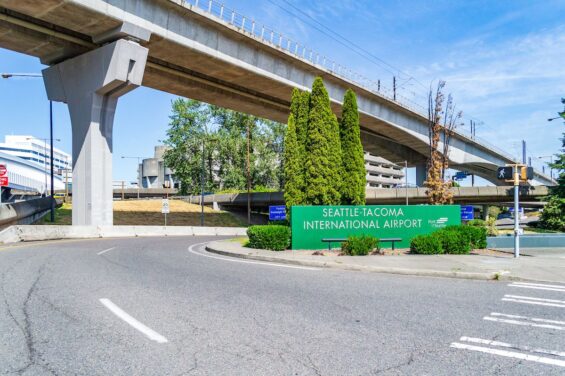
On July 8th Eric Schinfeld, Sr Manger of the Federal & International Government Relations for the Port of Seattle/Seattle Tacoma International Airport (SEA) was the presenter at the Pierce County Lunch and Learn. Filled with valuable insights, the presentation gave an overview of the Airport’s Master Plan for “Delivering Opportunity”.
As the 11th busiest aviation gateway for domestic and international passengers, SEA is also the 16th busiest air cargo airport – making it a major jobs and economic impact generator while also serving as a visitor’s first impression of the region. SEA has been recognized by Skytrax as the Best Airport in the United States for the last three years running.
According to Schinfeld, “A commitment to creating a world-class customer experience has been a priority for the airport over the last decade, especially as a growing number of travelers utilize this constrained facility. SEA’s focus on customers includes everything from reducing TSA wait times to maintaining fast Wi-Fi speeds to having clean bathrooms and clear wayfinding signage. The airport is simultaneously thinking about creating a Pacific Northwest sense of place, through local dining and retail options, local music in the terminals and specially commissioned local art throughout the facility.”
A newly released economic impact study found that SEA drives $33.4 billion in economic activity, including 179,950 jobs created with 94,510 of them being direct with $10.5 billion in direct earnings. Add to that $342 million in state and local taxes and you quickly recognize the importance of the airport to our region.
International services continue to grow at SEA with 17 new international routes added in just the last few years, including cities in Asia, Europe and the Middle East. With connections to almost 40 global destinations and 108 cities in North America, SEA provides connections to most major destinations, particularly thanks to two large hub carriers – with Alaska Airlines (53% market share) and Delta (24%). Then consider air cargo and the numbers get staggering, with 456,289 metric tons of freight coming through SEA in 2022.
“For SEA, direct air routes to and from the rest of the world is key. Each new international flight brings between $80-100 million in economic impact, but these global connections also allow our region to bring together businesspeople, tourists, families and friends from around the world more easily,” said Schinfeld.
And with the FIFA World Cup in the region in 2026, the estimated 750,000 fans coming to our region will have a much easier time travelling here. SEA is working with local groups on safety and security, terminal efficiency, ground transportation and in general an elevated experience for all the travelers coming through their facilities for this major event.
The future at SEA is filled with championing environmental sustainability. Reduction of airplane noise, raptor mitigation (bird strikes), and alternatives to airplane idling are just some of their priorities. Others include vehicle electrification, LEED certification for new airport buildings, and stormwater management.
“SEA has set a goal to be the greenest and most energy efficient airport in North America, and this commitment goes beyond helping the environment. Just as important is SEA’s goal to be a good neighbor to near-airport communities, which means doing everything possible to reduce aircraft noise, aircraft emissions, and other impacts,” Schinfeld said. He then added, “In particular, SEA is working to be a national leader in the transition to sustainable aviation fuels (SAF), which reduce both carbon emissions and other air particulates from aircraft engines.”
If you’ve been to SEA lately, then you have seen the vast number of projects underway, highlighting the $5 billion in Capital Improvements between 2024-2029. SEA proudly proclaims, “We Build While We Operate”. Projects include the expansion of C Concourse, restroom improvements, a parking guidance system, roadway improvements, and baggage optimization.
Looking forward, SEA is in state and federal environmental review for its Sustainable Airport Master Plan (SAMP), which includes 31 projects throughout the facility – from a taxiway extension to the expansion of the fuel farm, to improvements to the ground transportation area. Most notably, SEA is planning for a second passenger terminal to accommodate the estimated 57 annual passengers using the airport in the coming decade. That terminal will have a standalone parking garage, TSA checkpoints, roadway and curbside, plus 19 gates for aircraft. There will also be an automated people mover that connects to the main terminal and the rental car facility.
There are, however, still a series of steps needed to move forward on these projects. First, the FAA is finalizing the National Environmental Policy Act (NEPA) documentation that will analyze the environmental impacts of these 31 projects. That final report is expected by October 31, 2025. The Port will then be the lead agency for the State Environmental Policy Act (SEPA) process, including a major public comment period in early 2026. Once that process is complete, the individual projects will be brought to the Port of Seattle Commission for their review.
As the area continues to see substantial growth, it is heartening to witness SEA’s vision and dedication to the market. The entire region benefits from a vibrant airport.